Latest News

The 2012 Compressors

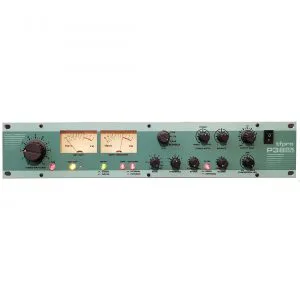
There are four stereo compressor types in the TFPRO range...

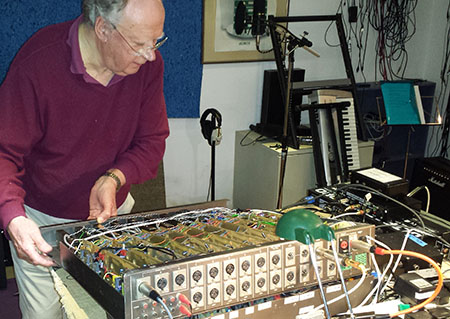
Ted introduces microphone transformer inputs

Ted introduces microphone transformer inputs

The finer points of why a mic transformer is the way to quality audio and the P110

Ted Fletcher explains orbitsound

Ted Fletcher explains orbitsound

One of Ted's inventions is explained in this youtube video

Latest Masterclasses

PERCEPTIONS IN RECORD PRODUCTION

PERCEPTIONS IN RECORD PRODUCTION

ADDRESS AT 'ART OF RECORD

DEPTH - SOME THOUGHTS ON SPATIAL SOUND

DEPTH - SOME THOUGHTS ON SPATIAL SOUND

Ted Fletcher discusses holophonic sound and space

Welcome to TFPro

SOUNDS, TECHNOLOGY AND A WAY AHEAD. Ted Fletcher March 13

Audio equipment design is a strange profession in that it has to involve a serious understanding of a whole lot of unrelated disciplines. In earlier days it involved an understanding of electronics both vacuum tube and solid state, as we progressed it involved more and more coming together with digital design and software yet there is still the absolute necessity to understand lots of basic physics, biology, music and even psychology.

All successful designers in the past have had to be ‘multi instrumentalists’ and I must count myself in that description; I could not have developed those early opto compressors without some background in music playing as well as recording engineering and studying the intricacies of how we think we hear sound. All that’s true and fairly obvious, and as designers we are constantly looking for ways to improve all aspects of sound recording and reproduction.

Now we have superlative recording systems able to reproduce quality ever closer to the original. We have fine equipment and digital manipulation that is non-destructive and extremely close to ‘lossless’, but there is one area of professional sound where there has been little in the way of progress for 40 years and that’s the area of transducers….. the bits of equipment that convert the sound back into a form that we can hear and appreciate…. loudspeakers.

In the late 1920s engineers like Alan Blumlien (a graduate engineer working for HMV in London) were experimenting with ways to improve the sound in the motion picture industry, trying to develop a way of making the dialogue come from the person appearing on the screen. A by-product of this work in directional sound was a research project that culminated in a patent application in December 1931 in which Blumlien set out the basics of stereophonic disc cutting and in the text referred extensively to spatial sound recording and reproduction.

At the same time I believe there was simultaneous development in the US and the result was the introduction of what we now call ‘stereo’ sound….. an awful misnomer as the word ‘stereo’ actually means ‘solid’ and the sound we hear from a pair of loudspeakers is a virtual image from the middle…. hardly ‘solid’!

After many years in the sound recording business I became more and more interested in what I saw as the weak spot in music recording and reproduction. Loudspeakers!

In 2005, semi retired from the ‘sound’ business after leaving the trail of ‘Alice’, ‘The Network Group’, ‘InterVox’ and ‘JoeMeek’, experiments with cardboard tubes and small loudspeaker drivers produced the beginnings of what is now becoming the new way to listen to sound.

MULTIPLE LOUDSPEAKER IMAGING.

All loudspeaker systems with the single exception of the Orbitsound spatial technology, rely on our hearing ‘filling in’ acoustic detail between loudspeaker radiators. In simple stereo systems the theory is that the sound becomes a panorama between and around the loudspeakers, each loudspeaker representing not only a sound but also direction and distance by means of time and volume level.

More complex systems like 5.1 and 7.1 merely extend the same principle and suffer from the same disadvantages to an even greater extent; the disadvantage of a fixed ‘sweet spot’ and the distortions introduced by timing errors due to distance differences between the ears….. the systems can only work for a listener in the exact sweet spot, and even then the result is variable because each ear hears sounds that are destined for the other ear, so there is real acoustic confusion!

The much more complex Wave Front Synthesis’ (WFS) system has theoretical validity but requires a perfect and predictable listening area as well as many loudspeakers and amplifiers.

As a basis for listening to high quality sound, the Orbitsound Spatial sound system (originally called ‘AirSound ™’ ) is unique providing the facility of spatial sound from a single source. The development of applications for the technology is now my continuing work.

STUDIES IN SPATIAL RECOGNITION

Ignoring loudspeakers and recorded sound for a moment, the way we recognise the spaces that we occupy is with a mass of inter-related cues and clues. Visual information is very much LESS important in this respect than has been thought. Eyesight may seem to be wide and sensitive, but in reality, the field of view is extremely narrow, and so it contributes little to the constantly changing picture in our minds of the form of our environment. I believe that this spatial awareness is a constant in our minds, and is being continuously updated and modified by all our senses, but of course, most importantly by hearing.

Yet this updating is mostly from what we would describe as unimportant parts of audio input; from reflections of course, and from the relationships between direct and reflected sounds. And not only from sounds sensed by the ears, but also from the action of sound on all parts of the body. (Infra-sound via the diaphragm, LF and even some mid frequencies modified by facial bone structure, and wide-band frequencies directly through the skull.)

So we are an organism living and reacting to the space in which we exist, the knowledge and appreciation of which is being modified by all our senses.

LOUDSPEAKER LISTENING--- POSSIBLE?

If we have this built-in, constantly updated model of our surroundings inside our head, how then is it possible to implant a totally new artificially created model of another environment with some sort of audio playback?

I have to say that the short answer is that we can’t.

It is increasingly clear that all efforts to ‘exchange’ our natural image of the world around us for an artificial one created by loudspeakers is just a waste of time and effort; attempts can only lead to confusion. Our own experiments, both in the laboratory and out in the commercial world, clearly show that if we can ‘augment’ our natural image of the surrounding world with audible clues that are naturally easy to interpret, then we are succeeding in providing realistic and satisfying sounds as never before!

We can be ingenious, and we can create systems that accentuate those factors that are dominant in our spatial recognition, while ignoring those over which we can have little control! Suddenly we are faced with practical difficulties, ingenuity is all very well but we live in a commercial world and practical systems need to be affordable.

The conventional and simple answer has been to listen to recorded sound via a pair of loudspeakers. The inference being that a ‘stereo’ signal will be reproduced via the loudspeakers such that a centrally placed performer will appear to be between the loudspeakers. Over the 60 years of its existence, 2-speaker stereo has become totally accepted, and has even been developed further to give a semblance of spatial effect, but as anyone can easily hear, the most elementary form of spatial listening can only be achieved in a carefully controlled environment and with the listener positioned exactly at the ‘sweet spot’.

AIRSOUND – ANSWERS TO DIFFICULT QUESTIONS

A fundamental problem of any attempt to reproduce spatial sound is an obvious one….. The listener is in a real environment, and practically cannot be removed from it; the artificial environment is going to be modified, and will inter-act with the real one, affecting the perception.

I believe that Alan Blumlein understood and appreciated this during his original work on spatial sound recording in 1934. Interestingly, it’s not known exactly how he listened to his own pioneering recordings except that he used multiple loudspeakers.

Had he lived, I like to think that Blumlein would have developed a system not unlike AIRSOUND for EMI in the years following the second world war. But sadly he was killed in an air crash, and his work was shelved, only to rediscovered very much later. 2-loudspeaker systems became the norm, and the word ‘stereo’, (meaning ‘solid’) came to take on other meanings.

By understanding the over-elementary thinking and arithmetic of Blumlein, it is relatively easy to manufacture a loudspeaker that will produce spatial effects on a par with 2-speaker systems, after all, with two loudspeakers the listener is trying to hear a performance from somewhere in between the loudspeakers; it is a virtual image. With a single-point system, the main information is coming from the loudspeaker directly, it is the spatial information that is virtual, as it should be!

But there is a lot more to this than simply trying to replace the 2-speaker system, admirable as that may be, there is scope for going very much further with the original aim, to reproduce spatial sound properly. With AIRSOUND, the audio signal has been converted from ‘left/right’ to ‘main’ and ‘spatial’. This offers a major advantage over other systems, it gives separate control over the spatial information, so we can enhance it to give greater input ‘clues’ to our inbuilt model of space.

I’m certain that Blumlein had no detail understanding of the importance of the accuracy of the generation of spatial information. Experiments show that extremely (even vanishingly) small errors in timing degrade the information causing our brains to reject the input. (This effect can be heard easily by listening to a conventional 2-speaker system and moving out of the sweet-spot…. The path-length from the two loudspeakers is varied and the spatial picture degrades. Note, the degradation is entirely inside your head!) Absolute accurate timing, (as good as could be achieved in the original recording,) when properly reproduced, can produce a spatial environment that is ‘in focus’ and solid.

TRANSDUCERS

There are yet another set of parameters interfering with clarity, and these are to do with the way loudspeakers operate. A loudspeaker responds to the current flowing in a coil in a magnetic field. A power amplifier produces an output voltage, and the current is a function of the loudspeaker impedance. This means that while the amplifier might perform very well and the loudspeaker may be very good, they are two entirely separate entities.

Experiments continue at the Sound House to improve the integrity of the ‘single point’ sound source, minimise distortions of all kinds and to look for ways to reinforce that internal sonic image that we all want.

But after all that..... there are still compressors!!

P38v8 'Legacy' Stereo Compressor

The LEGACY is a stereo 'opto' compressor solidly made in the UK. It is affordable by the smaller studio, but with full LEGACY performance instantly recognisable as superior to any regular compressors. The 'LEGACY' is in manufacture and is again available. Click here to read more.... and hear a demo!

Welcome

The forums are full of comments and questions from engineers asking why their recordings don’t sound ‘right’ when they are following the directions and using the right gear. Why does an apple pie from a supermarket not taste anything like as good as one that grandmother made? The answers are remarkably similar!

The supermarket pie has ‘uniformity’ processed into it; the ingredients may be pure and wholesome, but they are bland and ‘safe’. There are additives to preserve and packaging to enhance, the final result is pale and uninteresting.

Digital equipment is designed by engineers who firmly believe that the ‘quality’ of a sound can be defined and measured, but great engineers know that there is much more to sound than that!

The TFPRO P38 range…., definitive optical compressors; compressors that brings out mood and feeling.

The TFPRO P9….. Ted’s definitive equaliser; it brings warmth and life.

The TFPRO M16….. Fine mic amps and mixing, a formidable combination; redesigned version 2 now available.

The range of TFPRO equipment has been the result of a new look at the performance and design requirements of the 21st century record producer; a way of using the great tools and techniques of the past, and maintain the standards that are essential today

Ted originated the Joemeek® brand in 1993 and sold the trademark to PMI Audio Group in 2001. There are references to Joemeek® in the website..... Joemeek® is a registered trademark of PMI Audio Group.

Ted is President of Orbitsound Ltd and the inventor of the Orbitsound spatial sound technology.